Our hands-on methodology · Erasmus+ & European Solidarity Corps
Solar energy as an educational tool.
A small solar panel is one of the most honest teachers there is: point it at the sun and the meter moves. With a panel, a meter and a box of wires, a group builds, measures and improves a real solar energy system inside a single workshop — affordable, safe at low voltage, and powered by the one thing our summers never run short of. The method was authored by our president, piloted by our sister organisation in Athens, and is now being brought to Kocani. This is how it works, and how to be part of it here.
One panel. Every programme.
These are European methods. They need nothing a town like Kocani doesn’t already have.
You don’t need to know anything about electricity. The method is built so a facilitator can run it without an engineering background — and so a participant can start from “I have no idea how a panel works” and finish holding numbers they produced themselves.
Instant, affordable, reusable — and it fits everywhere.
The reason the same activity works for a school class, a senior group, a vocational mobility or an international youth exchange comes down to a few simple numbers.
The method
From a pocket panel to a working solar energy system.
Participants run a complete, real energy cycle with their own hands — unbox, wire, measure, tilt, log, improve — and where it fits, cost and pitch a solar-powered build. Because feedback is instant, a group closes several full build–measure–improve loops inside a single workshop or mobility, then keeps the data and defends the conclusions. It is learning by doing, with a result you can switch on.
A classic of hands-on STEM teaching we put to work — not one we invented. Small-scale solar is used in classrooms worldwide; the methodology here was written by Blagoj Ristov, president of EVEC Kocani, piloted by our sister organisation EVEC Athens, and is now being brought home to North Macedonia.
Why a panel teaches so much
Why solar energy is a near-perfect learning tool, in four parts.
Tilt the panel and the number moves. Cause and effect land instantly — no waiting, no abstraction, and every hypothesis gets tested on the spot.
A pocket-size panel and a basic multimeter work on a windowsill, a balcony or a schoolyard — no lab, no licence, and the Macedonian sun does the rest.
The phone charging at the end of the table runs on electricity the team made themselves. A lesson becomes a working product, and ownership follows.
Physics, maths and data, geography and the sun's path, economics, design and sustainability — one activity feeds them all, perfect for mixed-ability groups.
The skills participants can gain
Mapped to the EU competence frameworks evaluators actually use.
This is what makes solar energy fundable, not just fun: a single project develops competences across the frameworks behind the whole Erasmus+ agenda — with the green transition at the very top of the priority list.
GreenComp 2.1 — Systems thinking. “To approach a sustainability problem from all sides; to consider time, space and context in order to understand how elements interact within and between systems.” A panel is not a gadget; it sits between weather, orientation, storage and demand, and learners see all four move together.
ESCO: renewable energy technologies, types of photovoltaic panels. Key Competence: STEM — from the Council Recommendation on Key Competences for Lifelong Learning, the framework behind Youthpass. Participants in Erasmus+ Youth and European Solidarity Corps activities can receive a Youthpass recording these competences.
This is not a vocational qualification. We do not train or certify installers, and we do not pretend the activity substitutes for one.
Energy literacy you can hold: generate, measure and value clean electricity, then translate watt-hours into carbon and cost. Sustainability you act out, not just read about.
Cost a solar build, find who actually needs it — a charging station, a lantern, a market stall — and pitch it. Real business thinking on a €30 budget, not a promise of income.
Log volts, amps and watt-hours; chart a day's sun curve in a spreadsheet or dashboard; automate a reading with a simple sensor. Measurement is the heart of the method.
Troubleshooting a circuit that refuses to work builds patience, persistence and a growth mindset; building in small teams builds collaboration and communication.
Outcomes describe what participants can gain, and depend on how the activity is run. EVEC Kocani hosts and facilitates as a partner NGO — activities lead to a certificate of participation / Youthpass-style recognition of non-formal learning, not a formal qualification, and are not electrician or installer training. All activities use safe, low-voltage educational kits. Energy and climate figures discussed in workshops reflect external research, not EVEC findings.
What we offer
A blueprint we shape around your group.
From first watt to final pitch
A hosted solar week in Kocani can run as a simple arc: day one, unbox the kits and take the first honest measurement; days two and three, run the experiments and build the dataset; day four, turn panels, wires and imagination into something useful; day five, cost it, name it and pitch it. This is a blueprint, not a fixed programme — the length, language and level flex to fit your group, your field and your project design.
For institutions & partners
Bring the solar energy method into an Erasmus+ project.
You bring the learners and the theme; we bring an ESC Quality Label that accredits us to host in Kocani, the build-and-measure method, and a network that has already piloted it in Athens. Here are example project ideas across the Erasmus+ fields we work in, from youth and school education to adult education and VET, plus one European Solidarity Corps idea — the Corps is a separate EU programme, not an Erasmus+ field — to spark thinking. They are ideas, not past projects. When one fits, start the conversation through our Erasmus+ hub.
Power in Our Hands
Mixed teams from two countries build solar chargers and lanterns, then run a public energy-awareness pop-up in Kocani.
Same sun, different sky
Partner schools at different latitudes run the same panel protocol and share the data — our members include teachers at Kocani’s “Green Flag” eco-school, Rade Kratovce.
Solar for the household
Adult and senior learners demystify home energy — read a bill, measure real appliances, size a balcony panel — during a week in Kocani.
Green-jobs taster bench
An incoming VET group works a safe low-voltage bench — assembly, measurement protocol, fault-finding — as an orientation to clean-energy careers.
Solar pit lane
A sun-powered charging station for drone-sport events — teams race on batteries they charged themselves and count every watt-hour.
Sun crew, hosted
ESC volunteers help set up and run the first Kocani solar bench under our Hosting Quality Label — and turn each build into workshops for local youth.
For people
Or get your own hands on the panels.
Coming to do it yourself, rather than running it with your own group? There are four ways in: as a funded European Solidarity Corps volunteer for 2–12 months, as an intern through your university, through local volunteering if you are already in Kocani, or remotely through online volunteering — helping turn the method into materials other people can pick up and run.
Be clear about what you would be joining: the Kocani solar energy programme is being started now, so the first people in are helping to build it, not slotting into a finished machine. Every route ends with a certificate of participation and a reference. Local and online volunteering are unpaid. Find the one that fits through our Get Involved hub.
Measure & Teach
Run the solar bench, keep the measurement logs honest, and turn each build into workshops for Kocani youth — leaving with a portfolio.
The Kocani build-crew
Help assemble kits, test builds and co-run workshop sessions. No experience needed — curiosity and a free afternoon are enough.
Power it from anywhere
No sun required on your side: build measurement templates, how-to guides, translations and social content from wherever you are.
An ESC stay in Kocani
2–12 EU-funded months helping start the programme — accommodation, food, pocket money at the rates set by the current ESC rules for North Macedonia, travel, insurance, a Macedonian language course, a named personal mentor with regular one-to-one time and an emergency contact reachable outside office hours.
The data side
Four solar energy experiments any group can run.
Every experiment produces numbers worth arguing about — and that is what turns a demo into science, and a workshop into competence.
Chase the sun
Measure output at five tilt angles across the day and find the best one — then explain why the answer keeps moving.
The shade tax
Cover one cell, then a corner, then half the panel — and discover why shading costs far more output than it seems it should.
Series vs parallel
Wire two small panels both ways, predict the numbers first, then test — volts, amps and the trade-off between them.
A day in the sun
Log a full day of readings into a shared sheet, chart the curve, and compare it with a cloudy day — or with a partner group abroad.
Where it stands
Honestly: what exists, and what doesn’t yet.
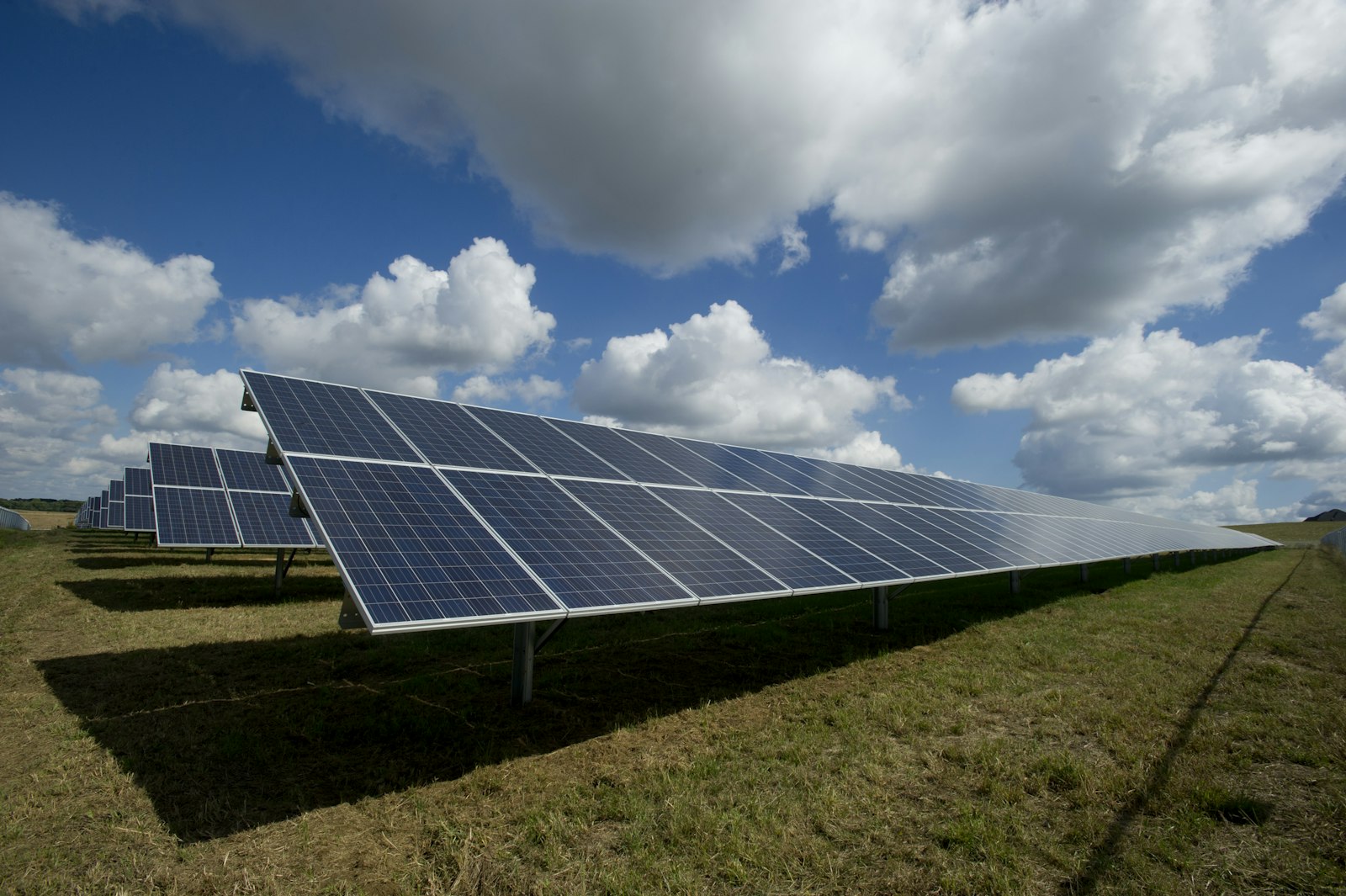
We would rather show you a truthful roadmap than photos of workshops that haven’t happened here yet — that is why the pictures on this page are diagrams of the method and stock photographs of the technology, not local snapshots.
Method written and piloted
The solar energy methodology was authored by Blagoj Ristov and piloted by our sister organisation EVEC Athens during hosted mobilities in Greece.
Bringing it to Kocani
We are adapting the materials for local use and looking for the first partner school, youth group and volunteers in Kocani and our branch towns.
The first local build
A first build–measure–improve cycle with a pilot group. Your class, club or organisation could be that group — early joiners shape how it runs here.
Solar energy is one tool in our hands-on method. See how the same loop works with living crops.
Explore the microgreens method →Let's build something
What does the sun do where you are?
A panel in Seville and the same panel in Tallinn are not the same panel. Identical hardware, different numbers — and that difference is the lesson, not a flaw in it.
- How much it makes in June, and how little in December
- What a kilowatt-hour actually costs where you live, and how long a payback takes at that price
- Which surfaces near you face the right way — and which are shaded by something nobody accounted for
- What near you is not connected to the grid at all: the pump, the shed, the shelter, the far end of the field
Learners in Lisbon and learners in Lithuania run the same experiment and get different answers. Put the two sets of numbers side by side and you no longer have a science lesson — you have a European project, and the northern partner is the more interesting one.
What would you put at the end of the cable?
A panel does not have to charge a phone. It can turn a motor.
Rural Europe has no shortage of places with plenty of sun and no convenient grid connection — and no shortage of things that would be useful to run out there, if only there were power to run them.
The question was never whether there is enough sun. It is what you would put at the end of the cable.
Run it in your town in North Macedonia.
Our network wants to establish a European community around these methods, and in North Macedonia that starts here: EVEC Kocani is the founding network member on this side of the border, and we are looking for schools, youth centres and organisations to build the Macedonian chapter with us — not to join something finished.
You don’t need any background in solar energy. The materials are built so a facilitator can run them without one.
We give — the method free; a walkthrough before your first cycle; the experience of a network that has already piloted it in Athens; co-authorship of whatever comes out of your pilot; and a say in what the Macedonian chapter becomes.
We ask — run it once, with one group, and tell us honestly what happened, including what didn’t work.
And if something occurred to you while you were reading this — tell us that instead. Some of the best projects our network has been part of started as somebody else’s idea, and we would rather join yours than talk you into ours.
No fee, no contract, no exclusivity. Minors take part with parental consent, per our safeguarding policy.
EVEC Kocani’s Erasmus+ and European Solidarity Corps projects are co-funded by the European Union. Views and opinions expressed are those of the author(s) only and do not necessarily reflect those of the European Union or the European Education and Culture Executive Agency (EACEA). Neither the European Union nor EACEA can be held responsible for them.
EVEC Kocani · European Voluntary and Educational Center Kocani · OID E10119353 · PIC 943554018 · ESC Quality Label (Hosting + Supporting) valid to 31/12/2027 — verifiable on the European Youth Portal (organisation 49665) · Kocani, North Macedonia.
Active since 2014 · 17 EU projects across our network · 4 branch offices. We have coordinated Erasmus+ ourselves — “Entrepreneurial Development Through Internet and Social Media”, 2020-1-MK01-KA102-077700 — verifiable on the Erasmus+ Project Results platform.
Methods by Blagoj Ristov, president of EVEC Kocani; piloted through our sister organisation’s hosted mobilities in Athens.
contact@evec.org.mk — we reply within 3 working days.
Three ways forward
For institutions
Erasmus+ partnerships
Every Key Action and field we partner on — start a project with us.
Go to the hub →For people
Get Involved
Internship, volunteering or a funded ESC placement — find your way in.
Go to the hub →More methodology
Mycelium as an educational tool
Another hands-on tool from the same family — grow, observe, learn.
See the method →