Our hands-on methodology · Erasmus+ & European Solidarity Corps
Drones as an educational tool.
A small caged drone — or a free simulator on a laptop the school already owns — turns flight into one of the most engaging teaching tools we know. Participants build, wire, repair, tune and pilot small drones: digital skills, engineering and teamwork wrapped in something that feels like play. The method was authored in our network and piloted in Athens — and EVEC Kocani is now bringing it to eastern North Macedonia. Nothing has flown here yet, and we say so plainly. This page shows how the method works, how to bring it into a project, and how to take part yourself.
One controller. Every programme.
These are European methods. They need nothing a village doesn’t already have.
You don’t need to know anything about drones. Nobody starts a session able to fly one. The method is built so a facilitator can run it without a background in aviation — and so a participant can arrive having never held a controller.
Screen-first, safe, inclusive — and it fits everywhere.
The reason the same activity works for a school class, an adult group, a vocational mobility or an international youth exchange comes down to a few simple numbers.
The method
From a screen to the sky — and a transferable skill set.
Participants run a complete, real cycle with their own hands — fly the simulator, build and wire, tune, fly the mission, review, repair — and where it fits, compete as a team. Because the loop from crash to fix to re-flight takes minutes, not weeks, a group closes many full cycles inside a single workshop or mobility, learning from every one. It is learning by doing, with a result you can watch fly.
A method built on recognised standards — not rules we invented. Drone soccer is FAI class F9A, and our network’s full drone-sport ecosystem lives on our Sport page.
Why a drone teaches so much
Drones: a near-perfect learning tool, in four parts.
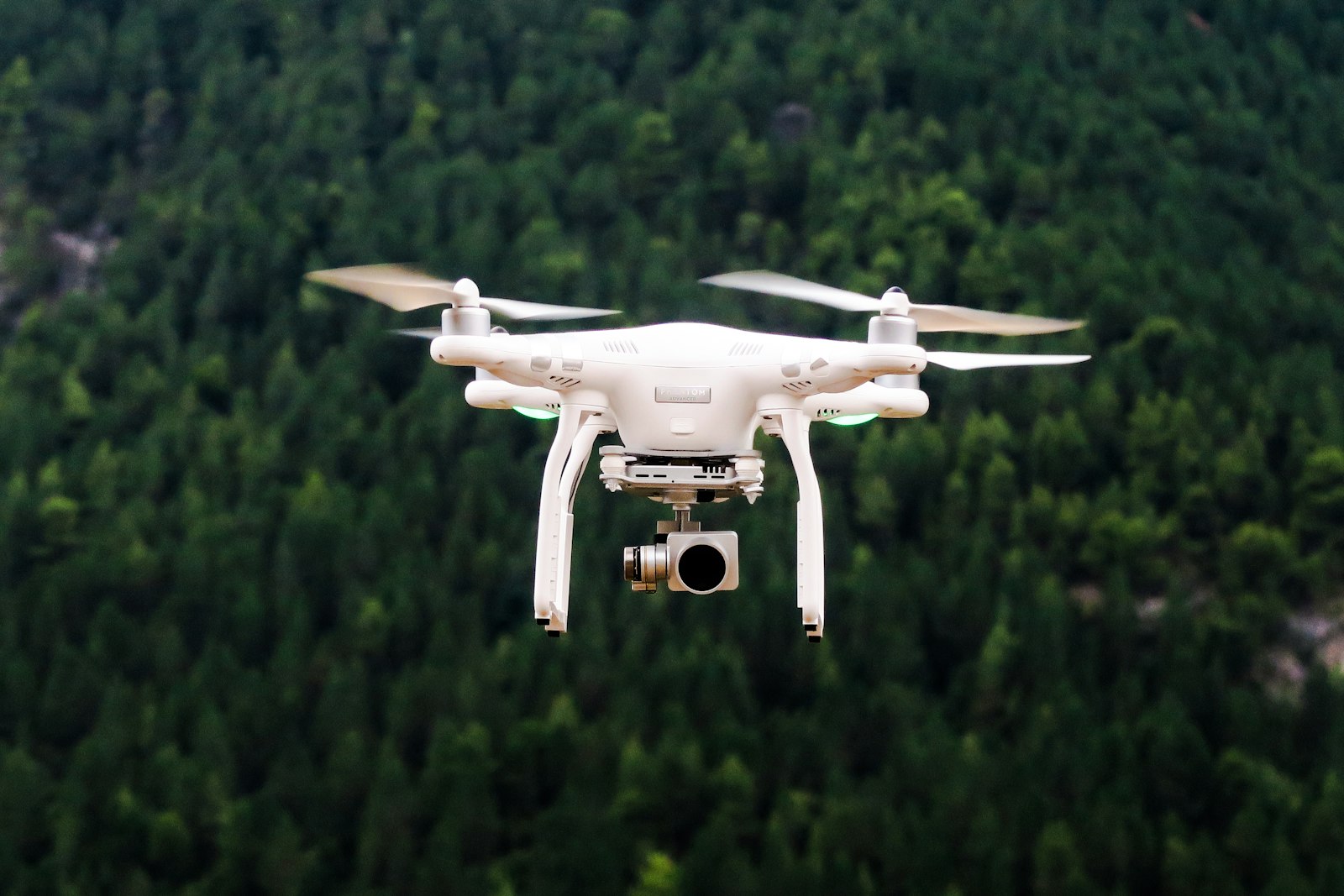
Free simulators run on the PCs a school already has, and one real controller flies the simulator and binds to real drones later. A group can train — and even compete online — before owning any aircraft.
The anchor discipline, drone soccer, is caged and indoor — collisions are the point of the game, not a hazard. No pilot licence, no airspace permit: a gym or large classroom is enough.
Participants build, wire, repair and tune their drones like a pit crew, then pilot them as a team. Applied physics, electronics and digital skills — absorbed through play, not slides.
A screen-first entry costs almost nothing and asks for no athletic prerequisites, so young people with fewer opportunities can join — and win — on genuinely equal footing.
The skills participants can gain
Mapped to the EU competence frameworks evaluators actually use.
This is what makes drones fundable, not just fun: a single project develops competences across the frameworks behind the whole Erasmus+ agenda — and speaks directly to the programme’s digital-transformation and inclusion priorities.
DigComp — Digital content creation. “To create and edit digital content in different formats, to express oneself through digital means.” Participants do not consume imagery; they capture it, process it and decide what it shows.
DigComp — Evaluating data and digital content. “To analyse, compare and critically evaluate the credibility and reliability of sources of data, information and digital content.” An aerial image is evidence only once somebody has argued about what it actually proves.
DigComp — Solving technical problems. “To identify technical problems when operating devices and using digital environments, and to solve them.” Wind, battery, signal, a failed calibration: the troubleshooting is real, and it happens in front of everyone.
ESCO: unmanned air systems. Key Competence: Digital competence — from the Council Recommendation on Key Competences for Lifelong Learning, the framework behind Youthpass. Participants in our activities can receive a Youthpass recording these competences.
We do not certify pilots, and we do not pretend to. Participants under 16 take observation, data and ground roles, and minors take part with parental consent, per our safeguarding policy.
Operate real hardware and software end to end — simulator settings, firmware and radio binding, batteries and flight data — then create and share content about what you fly, responsibly and safely.
Building, wiring, repairing and tuning a small drone is applied physics, electronics and maths — the EU key competence in science, technology and engineering, learned like a pit crew.
Learners can plan a club or a tournament end to end — budget the equipment tiers, assign the roles, promote the event and run it — turning an idea into action under real constraints.
Crash, diagnose, repair, re-fly. The short loop builds frustration tolerance and calm under pressure; flying as a team of three builds communication, trust and shared responsibility.
Outcomes describe what participants can gain, and depend on how the activity is run. EVEC Kocani hosts and facilitates as a partner NGO — activities lead to a certificate of participation / Youthpass-style recognition of non-formal learning, not a formal qualification, and not a drone pilot licence or certificate of competency. Any flying of real drones follows a simulator-first, safety-first approach — indoors with caged or ducted drones wherever possible — and always within EU (EASA) and national drone rules, which participants learn as part of the activity.
Where it’s heading
The method, wired into a real plan for our region.
In development · From Athens to Kocani
Drone skills for youth, agriculture and the green transition
Drones are part of the STEM toolkit our network piloted in Athens — and EVEC Kocani is now bringing the method home. The plan we are developing: simulator-first training any school in the east can start on the PCs it already has; safe indoor drone-soccer clubs on the FAI F9A rulebook; and, as the plans mature, UAV skills that serve agriculture and the green transition in our region — with the EU drone rules learned along the way. It is a plan we are building with schools and partners, not a result we claim: nothing has flown in Kocani yet, and we say so.
For institutions & partners
Bring the method into an Erasmus+ project.
You bring the learners and the theme; we bring a branch network across eastern North Macedonia — Kocani, Stip, Strumica, Delcevo and Lozovo — and the screen-to-sky method our network authored and piloted in Athens. Here are example project shapes across the Erasmus+ fields and the European Solidarity Corps to spark ideas. None of them is running here yet; every one of them could start with you. When one fits, start the conversation through our Erasmus+ hub.
Youth
Squad in a Week
Young people from two countries train on simulators at home, then meet for one short mobility to build their drones and fly their first caged team matches.
School Education
The zero-travel league
Partner schools each stand up a simulator-first drone club on existing PCs and meet in online matches — then co-write the shared classroom playbook.
Adult Education
Late take-off
Digital confidence for adult learners through simulator flying, drone-building basics and the rules of the sky — proof it’s never too late to learn tech.
VET
The repair bench
Hands-on electronics for a VET group — soldering, wiring, diagnostics and tuning on real small drones. We have coordinated an Erasmus+ VET mobility before; drones are the theme we want to bring to the next one.
Sport
Drone soccer, properly
Start a caged, indoor drone-soccer club on the FAI F9A rulebook — the anchor of the youth drone-sport ecosystem our network is building, and the first discipline we want on a gym floor in Kocani.
European Solidarity Corps
The volunteer flight crew
ESC volunteers hosted in Kocani under our Quality Label help stand up the first simulator clubs and youth sessions — and take the method home with them afterwards.
Verify us before you write to us: we coordinated the Erasmus+ VET mobility 2020-1-MK01-KA102-077700, and the EVEC network counts 17 EU projects since 2015 — every reference code on our Projects page can be checked on the Erasmus+ project results platform.
For people
Or get your own hands on the sticks.
Coming to do it yourself, rather than running it with your own group? There are four ways in: as a funded European Solidarity Corps volunteer for 2–12 months, as an intern through your university, through local volunteering if you are already in or near Kocani, or remotely through online volunteering — helping turn the method into materials other people can pick up and run.
Be honest with yourself about the timing: everything on this page is at the starting line in North Macedonia, so early joiners help build the thing rather than slot into it. Every route ends with honest recognition — a certificate of participation, and Youthpass where the programme provides it. Find the one that fits through our Get Involved hub.
Internship
Flight-club assistant
Help us stand up the first simulator sessions and STEM workshops for Kocani youth — set up the kit, coach first flights, keep the fleet flying — and leave with a portfolio of what you built.
Local volunteering
The ground crew
Help set up nets and gates, charge and label batteries, marshal matches and welcome newcomers as the first Kocani sessions start. No experience needed; flexible and unpaid.
Online volunteering
Mission control
No drone needed — help from anywhere: how-to guides, translations and subtitles, match graphics and the social channel.
ESC
An ESC placement in Kocani
2–12 EU-funded months helping run our youth activities, with drones in the toolkit we are building — accommodation within walking distance, food, pocket money set by the current ESC rules for North Macedonia, travel, insurance, a Macedonian SIM, a named personal mentor with regular one-to-one time and an emergency contact you can reach outside office hours.
Simulator-first
Four levels, one pathway — from a laptop to the podium.
We don’t start with expensive racing drones. We start on a screen, move into a safe indoor team sport, and let the talented few climb toward competition — every level built on recognised international standards.
Level 0 · Start here
Simulators
Free simulators on the PCs you already have, plus a few real controllers. Train pilots and run zero-travel online matches against partner groups.
Level 1 · Gateway
Tiny-whoop, indoors
Palm-sized ducted drones flown safely indoors — the gateway from the screen to real FPV flying, with all-in-one starter kits for a class.
Level 2 · School base
Drone soccer
Caged, indoor, full-contact team sport for a school gym — collisions are the game, not the hazard. Played to the FAI class F9A rulebook.
Level 3 · Advanced
FPV racing & freestyle
The competitive flagship — goggles-on racing through gates (FAI F9U / MultiGP) for the few who climb the whole ladder.
Spend on controllers first — they’re the durable asset participants keep, and they carry across every level. Equipment figures are indicative; we cost each setup with you against current EU prices. Every level teaches the EU (EASA) drone rules at the depth participants actually need.
Want the whole picture — the ecosystem, the funding routes and the partner plan? It all lives on our Sport page.
Explore EVEC drone sport →Let's take off
What would you look at?
A drone is only as interesting as the thing it is pointed at — and that changes completely depending on where you are standing.
- Illegal dumping in ravines, riverbeds and back roads
- Fire-risk mapping, and regrowth in the years after a burn
- Flood plains, drainage and where water actually goes
- Crop health, irrigation, field boundaries, abandoned land
- Heritage sites, photographed properly for once
- Urban tree cover, green space, and which neighbourhoods have none
- Rooftops, and which of them face the right way — a question our solar method picks up
The technical part is the same everywhere. The flying takes a week to learn badly and a month to learn well, wherever you are.
The question worth answering is local — and in most places it is one that somebody already argues about at council meetings.
A hundred metres up.
Standing in a field tells you about that field. A hundred metres up tells you about the region — which parcels were cut and when, roughly how much is lying in them, and whether there is any way to reach it.
Which becomes interesting the moment somebody needs to know how much of something a landscape actually holds, and whether it would be worth going to collect.
Run it in your school, your club, your town.
We are a founding member of the EVEC network, and together we want to establish a European network around these methods — organisations and schools that build it with us, not join something finished. It doesn’t have a name yet. The founding organisations should decide that together.
You don’t need any background in drones. The materials are built so a facilitator can run them without one.
We give — the method free; a walkthrough before your first cycle; direct access to the author of the method; a look, through our sister organisation in Athens, at how the pilots there were run; co-authorship of whatever comes out of your pilot; and a say in what the network becomes.
We ask — run it once, with one group, and tell us honestly what happened, including what didn’t work.
And if something occurred to you while you were reading this — tell us that instead. Some of the best projects we have been part of started as somebody else’s idea, and we would rather join yours than talk you into ours.
No fee, no contract, no exclusivity.
EVEC Kocani’s Erasmus+ and European Solidarity Corps projects are co-funded by the European Union. Views and opinions expressed are those of the author(s) only and do not necessarily reflect those of the European Union or the European Education and Culture Executive Agency (EACEA). Neither the European Union nor EACEA can be held responsible for them.
EVEC Kocani — European Voluntary and Educational Center Kocani · OID E10119353 · PIC 943554018 · ESC Quality Label, Hosting + Supporting, valid to 31/12/2027 · Kocani, North Macedonia.
Methods by Blagoj Ristov, president of EVEC Kocani, authored for the EVEC network and piloted through our sister organisation EVEC Athens during hosted mobilities in Greece.
contact@evec.org.mk — we reply within 3 working days.
Three ways forward
For institutions
Erasmus+ partnerships
Every Key Action and field we partner on — start a project with us.
Go to the hub →For people
Get Involved
Internship, volunteering or a funded ESC placement — find your way in.
Go to the hub →Go deeper
EVEC drone sport
The full ecosystem our network is building: drone soccer, the funding routes and the partner plan.
Go to the page →